Overview of Tick-borne Infectious Diseases
Definition
- Tick-borne infectious diseases are acute febrile illnesses transmitted mainly through bites from ticks infected with bacteria or viruses. The four types are scrub typhus, Severe Fever with Thrombocytopenia Syndrome (SFTS), Lyme disease, and tick-borne encephalitis.
- In the case of SFTS, transmission can also occur through exposure to the blood or body fluids of infected patients and animals.
- The case fatality rate of SFTS is about 20%. With no vaccine or specific treatment available, prevention relies on education. Early diagnosis and timely treatment through public awareness are extremely important.
Risk factors
-
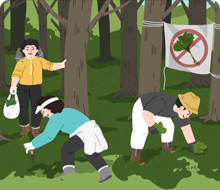
Farming work (Including kitchen gardens/weekend farms) -

Crop harvesting -
Carrying crops -
Mowing and weeding work -
Straying off hiking trails -
Persimmon picking -
Chestnut gathering -
Wild vegetable foraging (bracken, etc.)
Current status of occurrence
- (Scrub typhus) About 5,000–6,000 cases occur annually, with peak incidence in October–November. Regions with the highest incidence per 100,000 population are Jeonnam, Jeonbuk, Chungnam, and Gyeongnam, in that order.
- (SFTS) About 200 cases occur annually, mainly from April to November. The regions with the highest incidence are Gangwon, Gyeonggi, Gyeongbuk, and Gyeongnam, in that order.
| Infectious Disease | Year | |||||||||
|---|---|---|---|---|---|---|---|---|---|---|
| 2015 | 2016 | 2017 | 2018 | 2019 | 2020 | 2021 | 2022 | 2023 | 2024 | |
| Scrub typhus | 9,513 | 11,105 | 10,528 | 6,668 | 4,005 | 4,479 | 5,915 | 6,235 | 5,663 | 6,268 |
| SFTS | 79 | 165 | 272 | 259 | 223 | 243 | 172 | 193 | 198 | 170 |
| Lyme disease | 9 | 27 | 31 | 23 | 23 | 18 | 8 | 22 | 45 | 34 |
| Tick-borne encephalitis | - | - | - | - | - | - | - | - | - | - |
Major Symptoms
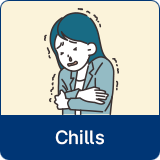
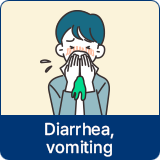
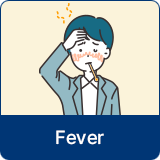
- The main symptoms of tick-borne infectious diseases include fever, muscle pain, chills, and gastrointestinal symptoms (nausea, vomiting, diarrhea, etc.).
- In scrub typhus, the characteristic sign is the formation of an eschar at the site of the chigger mite larva bite.
-
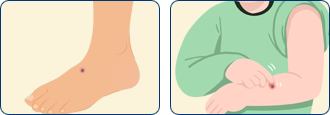
Chigger mite bite mark : Black scab (eschar)
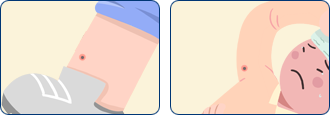
Hard tick bite mark :
Bite mark is difficult to detect.
Prevention guidelines
Before outdoor activities
- Wear appropriate clothing (long sleeves, long pants, hat, neck scarf, gloves, long socks, hiking boots/rubber boots, etc.).
- Use tick repellents
During outdoor activities
- Do not sit in grassy areas (use a mat when resting).
- Reapply repellents periodically, considering their duration of effectiveness.
After outdoor activities
- Shake off and wash clothes immediately upon returning home.
- Shower or bathe immediately upon returning home.
- If symptoms occur, visit a medical institution for diagnosis and treatment.
SFTS Surveillance Project Between Animals and Humans
Background and purpose
- With the recent increase in households raising pets, the risk of secondary SFTS transmission between animals and humans has risen. To prevent secondary infections among close contacts, a veterinary clinic–based surveillance system has been established.
- Education and awareness campaigns targeting high-risk groups (veterinary clinic workers, pet owners, etc.) to improve understanding of the disease
Project details
- Establishment of an SFTS surveillance system in veterinary clinics
- When an SFTS-positive animal is identified, collect information on the infected animal and a list of close contacts.
- Daily symptom monitoring of close contacts for 14 days
- If symptomatic close contacts are identified, provide guidance to nearby medical institutions capable of treating SFTS.
- Conduct of SFTS education and awareness campaigns for high-risk groups