
Domestic Operation of the Domestic Biological Terrorism Response Laboratory Network
- Inspection of Grade B laboratories in the laboratory network for preparedness against domestic occurrences of bioterrorism agents such as anthrax
- Distribution of diagnostic reagents for biological terrorism infectious disease pathogens
- Training and proficiency evaluation* for personnel responsible for pathogen diagnosis and detection testing Culture testing of high-risk pathogens and genetic detection testing of unidentified environmental samples
International Continuation of participation in Laboratory Network
- Securing the latest diagnostic testing methods and reagents for biological terrorism pathogens
- Participation in proficiency evaluation for detection and testing of biological terrorism pathogens
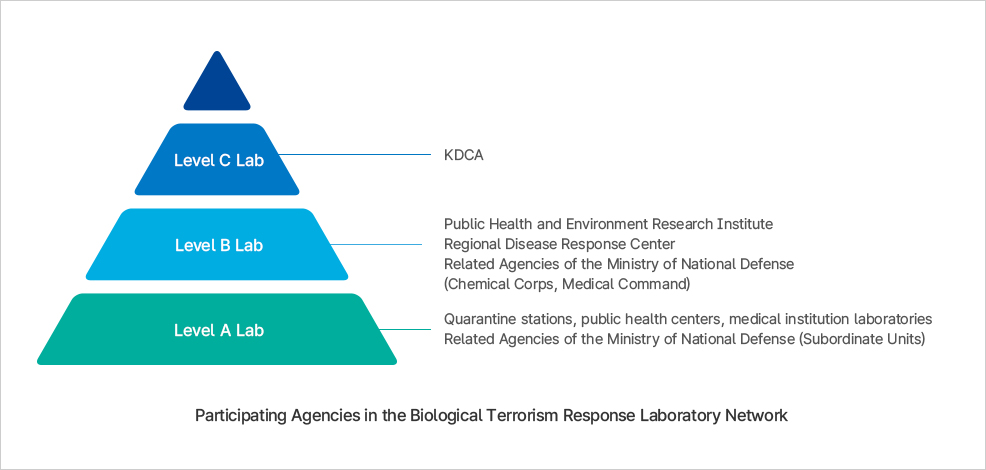
이 이미지는 생물테러 대응 실험실 네트워크 참여기관을 단계별로 구분한 피라미드 구조도이다.
- Level C Lab: 질병관리청
- Level B Lab: 보건환경연구원, 권역 질병대응센터, 국방부 유관기관(화생사, 의무사)
- Level A Lab: 검역소, 보건소, 의료기관 검사실, 국방부 유관기관(예하부대)
의미: 상위 단계로 갈수록 역할이 중앙 집중적이고 전문적이며, 하위 단계는 지역·현장 대응을 담당한다.
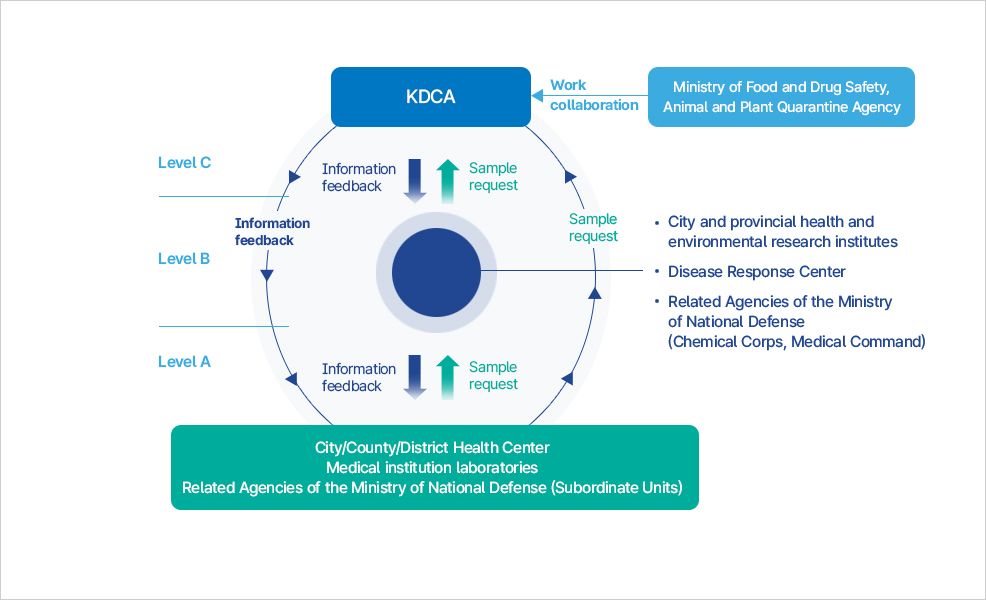
이 다이어그램은 생물테러 대응 실험실 네트워크의 연계 체계를 나타낸다.
- 등급 C: 질병관리청이 최상위 기관으로, 식품의약품안전처·농림축산검역본부와 업무 협조를 진행한다.
- 등급 B: 시·도 보건환경연구원, 질병대응센터, 국방부 유관기관(화생사, 의무사)이 포함되며, 질병관리청 및 하위 기관과 정보교류와 검체 의뢰를 수행한다.
- 등급 A: 시·군·구 보건소, 의료기관 검사실, 국방부 유관기관(예하부대)이 포함되며, 지역에서 발생한 검체를 상위 기관에 의뢰하고 정보를 공유한다.
정보 흐름: 등급 A 기관에서 수집된 정보와 검체가 등급 B, 질병관리청으로 전달되며, 상위 기관은 결과와 정보를 다시 하위 기관으로 환류한다.